


For years I treated home fragrance as an air problem. Candles, diffusers, reed diffusers, all of it pointed at the middle of the room. It took me an embarrassingly long time to notice that most of the smell in a house isn’t in the air at all. It’s in the fabric.
Sheets get away with it because you wash them. A sofa doesn’t. Neither do curtains, and neither does a car seat, which is probably the least-washed piece of upholstery any of us owns. These are the surfaces that quietly collect everything and never get a reset, and they’re the reason a room can smell stale twenty minutes after you’ve lit something lovely.
That’s the gap a linen spray fills. Not the sheets you strip every Sunday, but the fabric you can’t wash and don’t think about until a guest’s face does the thing.
Sorting through a bunch of them on those three surfaces revealed a helpful pattern. The best linen sprays work by performing some behind-the-scenes chemistry, not just masking the problem with fragrance and hoping for the best. You can’t tell this difference just by looking at the front of the bottle unless you know what to look for.
Here’s how they actually work, what to check before you buy, and the ten I’d keep.
Why Sofas, Curtains, and Car Interiors Trap Odors
Fabric isn’t a flat surface. Get close to your sofa arm and it’s more like a forest, thousands of fibers with air gaps between them, sitting on a slab of foam that behaves like a sponge. Smells don’t sit on that. They sink into it.
What sinks in is mostly oil. Skin oils from every hand that has rested on that armrest. Cooking oil, which travels much further than people expect and lands on the nearest soft thing, which is very often a curtain. Dog. Perfume. Smoke. These are heavy, oily molecules, and once they’re down in the fibers they are not leaving on their own.
Heat and moisture finish the job. A closed car in July is a slow oven for whatever is living in your seat foam, which is why the same car smells worse at 2 p.m. than it did at 8 a.m. Curtains soak up humidity from the kitchen and the window. A sofa absorbs whatever the last person to sit on it brought with them.
The reason these three surfaces stay smelly while your bedding doesn’t is boring once you say it out loud. You wash your sheets. You do not wash your sofa. Nobody launders curtains as often as they think they do, and nobody at all is putting a car seat through a spin cycle. These are the fabrics with no reset button, so they just keep collecting.
How Linen Sprays Neutralize Odors Instead of Masking Them
Most people assume a linen spray is just perfume in a bottle. Plenty of them are. But the good ones are doing something more interesting, and that difference matters far more than the scent printed on the label.
A masking spray adds a smell on top of a smell. You get vanilla-and-dog for twenty minutes, and then you get a dog. A neutralizing spray goes after the odor molecule itself.
The most common way it does that is with a molecule shaped a bit like a tiny donut. Cyclodextrin, the workhorse behind Febreze, is a ring with a hollow center, and odor molecules get caught inside that hollow where your nose can’t reach them. A deodorizer called Ordenone works on the same principle, and it shows up in one of the sprays further down this list.
Its patent filings describe concave molecular structures with internal cavities that capture odor-causing molecules and inactivate them, and it was built specifically for the sulfur and ammonia end of the spectrum. Which is a polite way of saying the smells that come from living bodies.
Other formulas neutralize by chemistry rather than capture, nudging the pH of a smelly molecule until it stops being smelly.
If a bottle lists only water, alcohol, and fragrance, you’re buying perfume for your couch. That’s completely fine if your couch is clean and you just want the room to smell like a nice hotel. It is not fine if your couch smells like a wet retriever. Look for an odor-eliminating claim attached to an actual named ingredient, not just the word eliminates floating around in the marketing copy.
What to Look for in a Linen Spray for Sofas and Cars
Sheets are forgiving. Sofas and car seats are not, and what I care about changes completely once I’m spraying something I can’t throw in the wash.
Will it mark the fabric?
This is the one that can actually cost you money. Oil-based sprays cling to fibers longer, which is why they last, but that same oil can leave a spot on a pale sofa if you spray from too close. Water-based formulas are safer and fade faster. Choose your trade-off on purpose rather than by accident.
Does it neutralize or just cover?
On the sofa, the dog has taken over; this is the main issue. A covering spray puts a new scent on top of the old one, so you get about twenty minutes before the dog smell returns. A neutralizing spray actually gets rid of the odor, which is the only kind that works on surfaces you can’t wash. If the label doesn’t say it removes odors, assume it just covers them up.
How big is the bottle, really?
A 4-ounce bottle is a bedside product. A three-seat sofa and a pair of full-length curtains will drink it. Treating large surfaces on a small bottle means reordering every month.
Can you live with the scent daily?
A pillow you smell for eight minutes before sleep is a very different job from a sofa you sit on for four hours every evening. Bold single-note scents that are lovely on a pillowcase can be exhausting on a couch.
What's in it, if you have pets or small kids?
Read the safety section below before you buy. Some perfectly lovely essential oils are a genuinely poor idea around cats, and that isn’t something you want to discover after the fact. If that’s your situation, our guide to non-toxic home fragrance is worth reading first.
Sprayer quality.
It may not be glamorous, but a trigger sprayer can cover a sofa cushion in just three pulls. In contrast, using a small perfume atomizer will leave you pumping away like you’re trying to inflate a raft.
The water-versus-oil question comes up constantly, so here it is side by side.
| Factor | Water-based sprays | Oil-based sprays |
|---|---|---|
| Scent life on fabric | Shorter, fades faster | Longer, clings to fibers |
| Risk of marking fabric | Low | Real, if sprayed too close |
| Best surface | Sofas, car seats, daily use | Curtains, bedding, heavier fabric |
| Drying time | Fast | Slower |
| Safe bet for pale fabric | Yes | Spot-test first |
Neither one wins outright. I keep a water-based spray for the sofa and the car, where I’m spraying often and don’t want residue, and an oil-based one for curtains, where I want the scent to stay put for days.
How I Tested Every Linen Spray on This List
I judged everything here against a single question. Does it still smell good on a surface I can’t wash, four hours later?
Every spray met the same three surfaces. A fabric sofa cushion, a lined curtain panel, and a car seat, which is the cruelest test of the three because heat exaggerates everything, good and bad.
Four things mattered.
1. Scent at four hours, not four seconds.
Almost every spray smells wonderful the instant it leaves the nozzle, and that tells you nothing at all. What counts is what survives once the top notes burn off, and that’s where the weak ones quietly fall apart.
2. Marks and residue.
Each one went onto a light fabric swatch from about eight inches away, then dried fully while I watched for water spotting or an oily film. The oil-based sprays are the ones to keep an eye on here.
3. Odor performance, not just fragrance.
A spray that merely smells nice is a perfume. I wanted to know whether it did anything to a smell that was already there, or simply parked on top of it.
4. Coverage per bottle.
How much of a real sofa one bottle can realistically handle, because price per ounce is the number that matters, not the number on the tag.
The 10 Best Linen Sprays Worth Buying
These range from a 2-ounce spray that fits in your cup holder to a 33-ounce bottle that can handle your whole sofa and both sets of curtains. I’ve pointed out what each one does well and where it might fall short.
1. Muse Apothecary Linen Ritual, Lavender Serenity
This is the one I reach for when I want a bedroom to smell considered rather than clean. Lavender Serenity isn’t a soapy lavender. The blend runs through night-blooming jasmine, ylang-ylang, coconut milk, chamomile, French lavender, amber, patchouli, and rosewood, which is a long way of saying it has actual depth. It smells like something you’d pay for in a small hotel.
The credentials are real too. It’s Leaping Bunny certified and a USDA Certified Biobased product, pH balanced, with no synthetic fragrance, parabens, phthalates, or formaldehyde. Made in the USA. If you’ve been avoiding fabric sprays because of what’s in them, this is a sensible place to start.
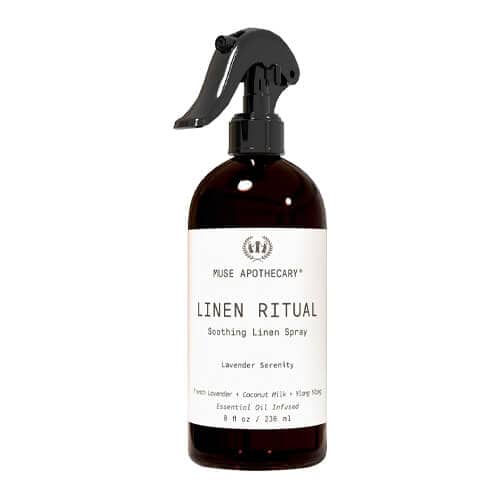
Muse Apothecary Linen Ritual – Aromatic, Soothing, and Relaxing Linen Spray
For Bedding, Laundry and Fabric Spray Freshener – Infused with Aromatherapy Essential Oils – Lavender Serenity
Two honest notes. First, the scent doesn’t hang in the air for long, and buyers say so repeatedly. What it does is settle into the fabric, so you get it when your face meets the pillow rather than when you walk through the door. Treat it as a fabric spray, not a room spray, and you won’t be disappointed. Second, and this one matters, it contains ylang-ylang, which VCA Animal Hospitals lists among the essential oils that are poisonous to cats. If you have a cat, pick something else from this list.
Best for: bedding and a bedroom that should smell layered rather than laundered.
2. Aromafume Vanilla Room, Linen & Pillow Spray
Curtains are the surface everyone forgets, and they’re the one where this spray earns its place. Aromafume’s mists are oil-based, and the brand is upfront that this is the point. Oil clings to fibers, so the scent lives on the fabric for days rather than hours. On a curtain panel, which nobody is washing this month or next, that’s exactly the behavior you want.
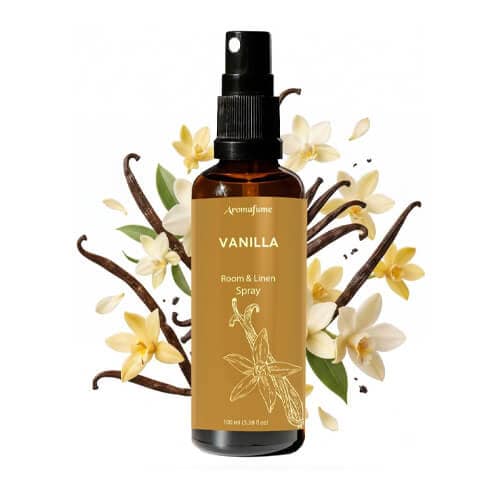
Vanilla Room, Linen & Pillow Spray by Aromafume
100ml/3.38 fl oz | with Pure Vanilla Essential Oil | Aromatherapy Spray | Mist for Bedding, Fabrics
The vanilla itself is made with real vanilla essential oil, and the ingredient list is short enough to read in one breath. It’s warm and slightly foody without tipping into cupcakes, which is a harder balance than it sounds.
The catch is the size. At 100ml, this is a small bottle, and if you point it at a sofa you’ll be reordering by the end of the month. It’s a curtain and pillow product, and it’s priced and sized like one. Aromafume also tells you to hold the bottle back and mist evenly to avoid leaving marks, which is the standard oil-based caveat and worth obeying on pale fabric. Their own label advises spraying away from babies and keeping it out of reach of children and pets.
Best for: curtains, and anyone who wants a warm scent that stays put for days.
3. Natural Lavender Mint Room and Linen Spray
The most useful all-rounder on this list, mostly because it doesn’t care where you point it. Eight ounces, a pure lavender essential oil blend with mint, no artificial colors, no parabens, nothing animal-derived. It’s sold as a pillow mist, a fabric refresher, a car freshener, and a yoga mat spray, and unlike a lot of products that claim four jobs, it’s actually decent at all of them.
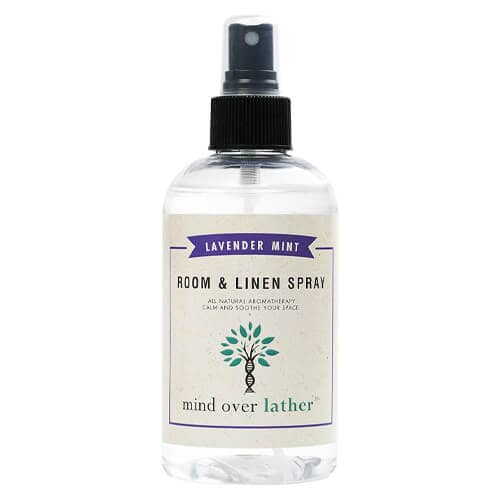
Lavender Mint Linen Spray & Pillow Mist – Natural Room Spray
With Pure Lavender Essential Oil Blend, Bedding & Sheet Freshener, Aromatherapy Spray for Home, Bedroom & Yoga, 8 oz
Lavender with mint is a smarter combination than straight lavender for daytime surfaces. The mint lifts it and stops it from sliding into that heavy, sleepy, potpourri register that pure lavender falls into on a warm afternoon. In a car, that lift is the whole reason it works.
The mint is also the reason to be careful. Peppermint sits on VCA’s list of oils that are poisonous to cats, so this is another one to skip if you have one. Cat-free households, though, get a spray that quietly handles three rooms and a vehicle.
Best for: one bottle covering the sofa, the car, and the gym mat.
4. Victoria's Lavender Linen Spray
If the lavender in most sprays has ever struck you as fake, this is the right one. Victoria’s Lavender is handmade in Oregon with 100% pure lavender essential oil, from a brand that also runs a lavender farm, and it smells like the plant rather than an idea of the plant. There’s a green, slightly herbal edge underneath that synthetic lavender never manages.
Eight ounces, made in the USA, and about as short an ingredient story as you’ll find.
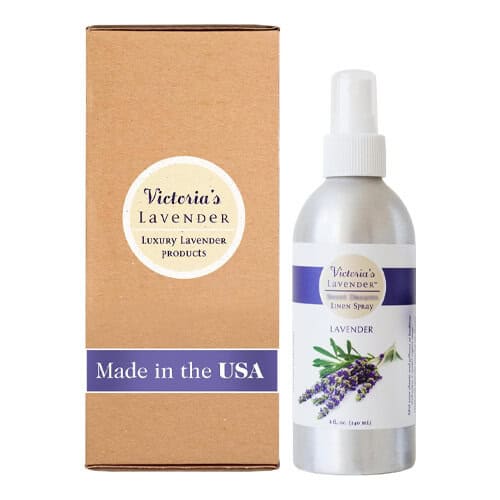
Victoria’s Lavender Linen Spray – Aromatherapy Pillow Mist & Linen Spray
For Bedding, Soothing Lavender Essential Oil Pure Blend for Bed & Pillows, Relaxing, Handmade in Oregon, Made in USA (8 oz)
Now the honest part. Pure lavender is a polarizing scent, and this is pure lavender with nothing sanding down its edges. Buyers of single-note lavender sprays regularly complain that they wanted something blended in to soften it, and if that’s you, the Muse blend or the lavender-mint above will suit you better. This is a spray for people who already know they like lavender and are tired of being sold something else.
It’s also the most concentrated lavender product here, which makes it the one to avoid outright if you own a cat. The ASPCA lists lavender as toxic to cats, and a spray built on nothing but lavender essential oil is the worst-case version of that problem.
Best for: lavender purists and a bedroom that should smell like the real thing.
5. Linen Scentsations Fabric & Linen Spray, English Lavender
Two 16-ounce bottles, 32 ounces in total, and that’s the entire pitch. This is the spray you buy when you’ve stopped experimenting and just want a sofa and a set of curtains to smell fresh without doing the math on every spritz.
The brand has been at this since 1962 and the formula is made in the USA, non-toxic, dye-free, and aimed squarely at pet, smoke, and laundry odors. On a sofa, it does the job.
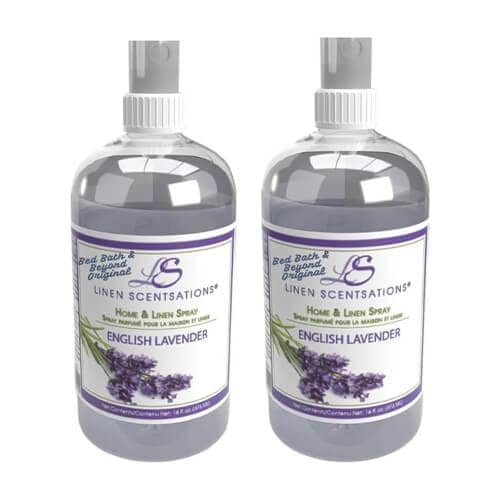
Linen Scentsations Fabric & Linen Spray, English Lavender, 16oz x2
2 Pack, 32oz Total, Odor Eliminator & Freshener, For Bedding, Clothes, Room & Pillow
One correction to a thing you’ll see repeated elsewhere. The listing markets this as pet-friendly, and it also states that it’s infused with pure English lavender essential oil. Those two claims sit awkwardly together, because the ASPCA lists lavender as toxic to cats. Pet-friendly, here, does not mean cat-friendly. Dog households are fine. Cat households should read the safety section below before buying this or any other lavender spray on this list.
What you’re giving up otherwise is nuance. This is a pleasant, competent lavender, not a composed fragrance, and nobody is going to ask you what it is. On a sofa that gets sprayed twice a week, that’s the right call anyway. Save the interesting scent for the pillow.
Best for: large surfaces, pet households, and the best value per ounce here.
6. SMELLS BEGONE Air Freshener Home & Linen Spray
If you have an actual smell problem rather than a freshness preference, start here.
This is the Ordenone spray I mentioned earlier, and it’s the only one on this list built as a deodorizer first and a fragrance second. Ordenone captures odor molecules in a molecular cavity and inactivates them rather than perfuming over them, and it was formulated for the sulfur and ammonia smells that ordinary sprays cannot touch.
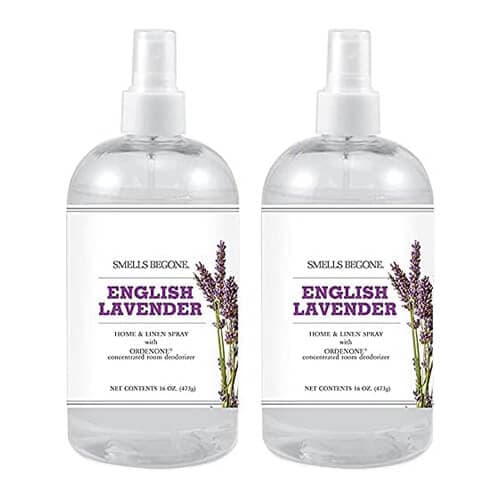
SMELLS BEGONE Air Freshener Home & Linen Spray
16 oz, Pack of 2 – Odor Eliminator – Made with Essential Oils (Lavender)
It comes as two 16-ounce bottles, made in the USA with plant-derived ingredients, and the label is refreshingly plain about where to use it: any soft surface in the home, office, boat, or RV. It’s safe around pets and children and on most fabrics, though the brand does tell you to test a small area first on anything fine or delicate, which is sound advice for every spray on this list.
The trade-off is exactly what you’d expect. This is not a beautiful scent. It’s a clean one, and it’s there to do a job. I keep it for the car and the dog’s end of the sofa, and something prettier for everywhere else.
Best for: real odor problems, smoke, pets, gym kit, and cars that have earned it.
7. Aromasong Eucalyptus Mint Room Linen Spray
Eucalyptus and wild mint is the closest a linen spray gets to opening a window. It’s cold, green, and faintly medicinal in the best way, and it’s the scent I want in a car on a hot afternoon or a bathroom that has stopped pulling its weight. Where lavender settles you, this one clears the air, and that’s a genuinely different job.
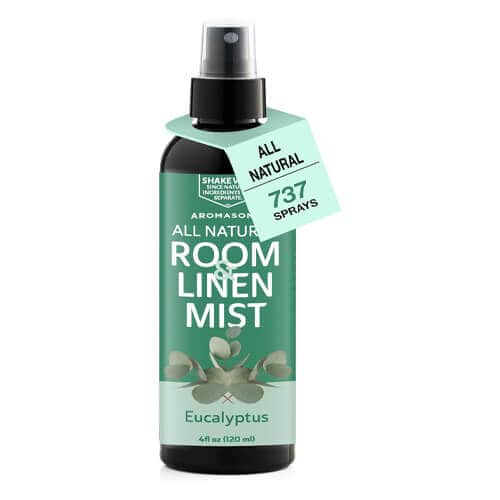
Aromasong Eucalyptus Mint Room Spray – Natural Room Deodorizer
Non-Toxic, Eucalyptus Linen Spray for Pillows & Sheets, 4 fl oz
It’s plant-based and cruelty-free, made in small batches by a family business, and formulated to neutralize odors rather than sit on top of them. The bottle is 4 ounces, which is small, but this is a spray you use in short bursts rather than by the fistful. If eucalyptus is a scent you keep coming back to, it’s worth reading up on essential oils before you build a whole shelf around it.
Same warning as the lavender-mint, and stronger here. Both eucalyptus and mint appear on veterinary lists of oils that are poisonous to cats, and this spray is built on both of them. It’s a lovely product in a cat-free home and one I would not have in a house with a cat.
Best for: hot cars, tired bathrooms, and anyone who finds florals cloying.
8. C&E Craft Scented Room, Body & Linen Spray Set
Two 2-ounce bottles, which is small enough to be a feature rather than a flaw. One lives in the car door, one lives in a bag, and neither takes up a meaningful room. For a quick reset before someone gets in the passenger seat, that accessibility beats a better spray that’s sitting at home under the sink.
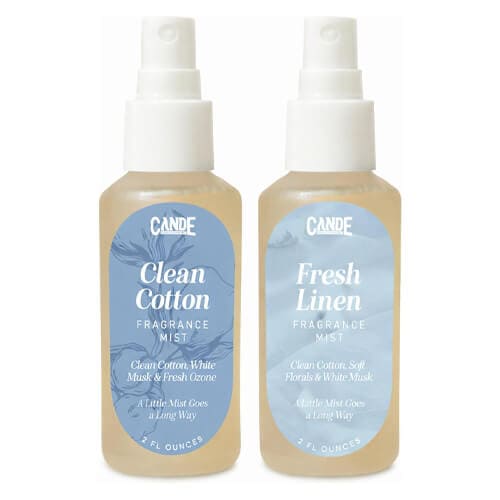
C&E Craft Scented Room Spray, Body & Linen Spray Set
2 Pack of 2 oz Fragrance Mists – Home Air Freshener, Fabric & Pillow Spray, Long Lasting Scent (Clean Cotton & Fresh Linen)
They’re built on phthalate-free fragrance oils, and the mist is genuinely fine, which matters more than it sounds. A coarse spray on a car seat leaves you with visible droplets. This one lands evenly if you hold it the recommended 6 to 12 inches back.
It’s also a body mist, which I mention mainly to explain the scent direction. These lean sweet and gourmand, and the profiles run playful rather than grown-up. If your taste in home fragrance runs to sandalwood and smoke, this will not be your bottle. If you want your car to smell like clean laundry and something faintly sugary, it absolutely will be.
Best for: cars, travel, gym bags, and testing a scent before you commit to a big bottle.
9. San Francisco Soap Company Smells So Clean, Italian Linen
This is the bottle I’d hand someone who has one sofa, two sets of curtains, a car, and no patience.
It’s 33.8 fluid ounces, which is an absurd amount of linen spray, on a trigger sprayer that covers a cushion in a few pulls instead of a hundred. Dye-free, made in the USA, and explicitly cleared for curtains, upholstery, carpets, and the car.
The Italian Linen scent is the clean-hotel register, all fresh laundry and soft cotton, and it’s the closest thing on this list to that expensive-lobby smell people keep asking me about. It won’t get you all the way there on its own, mind you. For that you want a hotel scent diffusers working the air while the spray handles the fabric.
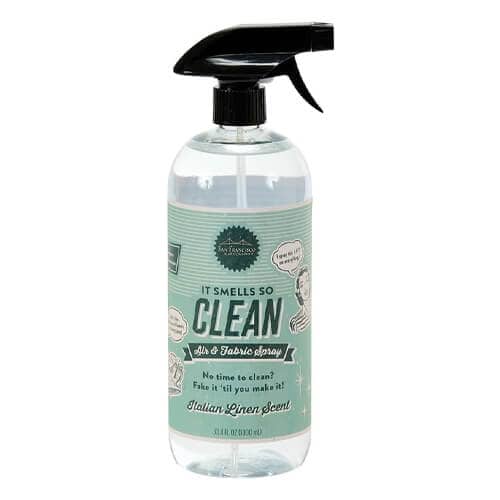
San Francisco Soap Company Smells So Clean Linen Spray
Italian Linen | 33.8 fl oz | Fresh Spray | Multi-Purpose and Dye Free
Dog owners are the ones who rave about it, especially because it dries quickly, leaves no residue, and doesn’t stain light-colored fabrics, something that’s not always guaranteed with products of this size and price.
The honest warning is batch consistency. There’s a real, repeated complaint in the reviews that some bottles arrive noticeably weak, with one buyer reporting that all five they ordered were closer to water than to the spray they’d smelled in a store. Most people get a good one. Some don’t. At this price I’d still take the bet, but I’d rather you knew going in.
Best for: big surfaces, best value, and the hotel-clean scent most people are actually chasing.
10. Natural Bedroom Linen Spray with Plant Extracts
Four 4-ounce bottles, four different scents, and that’s the whole appeal. You get chamomile, rose, oud-agarwood, and a woody forest blend, and you find out what you actually like by living with them for a week rather than guessing from a product photo.
The oud is an interesting one. Agarwood is the smoky, resinous note behind a lot of expensive fragrance, and finding it in a sub-twenty-dollar four-pack is genuinely unusual. On curtains it’s excellent, warm and a bit grown-up. The chamomile and the rose are the crowd-pleasers, and reviewers tend to converge on those two.
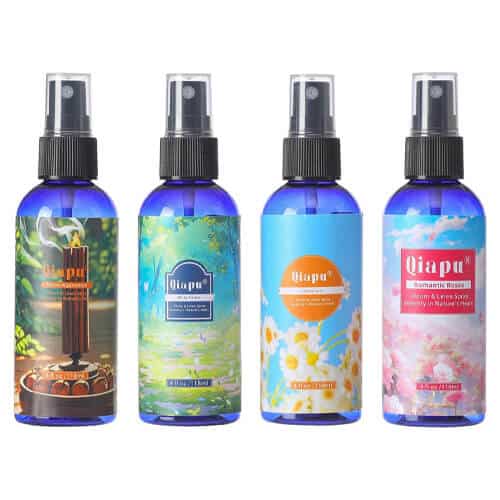
Natural Bedroom Linen Spray Scented Room Mist with Plant Extracts
Long Lasting Freshness for Sheets, Pillows & Curtains –Ebony Agarwood + Misty Forest + Chamomile + Romantic Rose 4oz (4 Bottle)
Two flags. The listing claims up to 72 hours of fragrance, which is a manufacturer’s number rather than one I’d repeat as fact, so treat it as marketing rather than a spec. And several buyers report bottles arriving slightly sticky from leaks in transit, which is annoying but not fatal. The bottles are basic plastic with a basic label, so if you were hoping to leave one out on a shelf, it won’t hold up next to the Muse.
Best for: sampling scents cheaply, and anyone curious about oud without the price tag.
If you want one bottle to solve everything, it doesn’t exist, and any list telling you otherwise is selling something. My routine is using a large, reliable bottle for the sofa and curtains, a deodorizer for the car and the dog’s spot, and a nice, small one for my pillow.
How to Use Linen Spray on Sofas, Curtains, and Car Interiors
Most people spray too close, too much, and in the wrong place, then decide the product doesn’t work. A few habits fix nearly all of it.
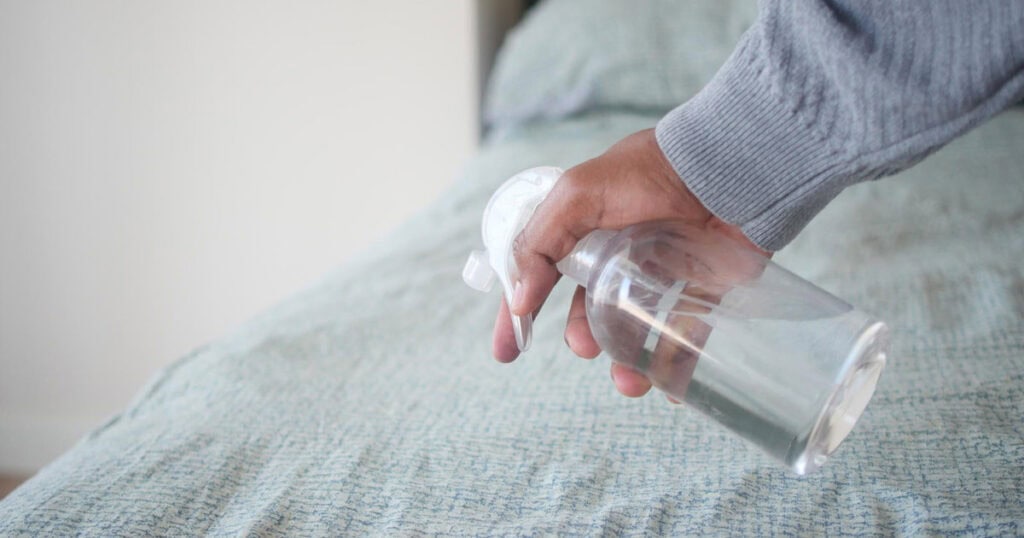
- Spot-test first, every time. Somewhere hidden. Under a cushion, the back hem of a curtain, the underside of a seat. Let it dry completely, then look. This takes two minutes and has saved me from at least one very expensive mistake.
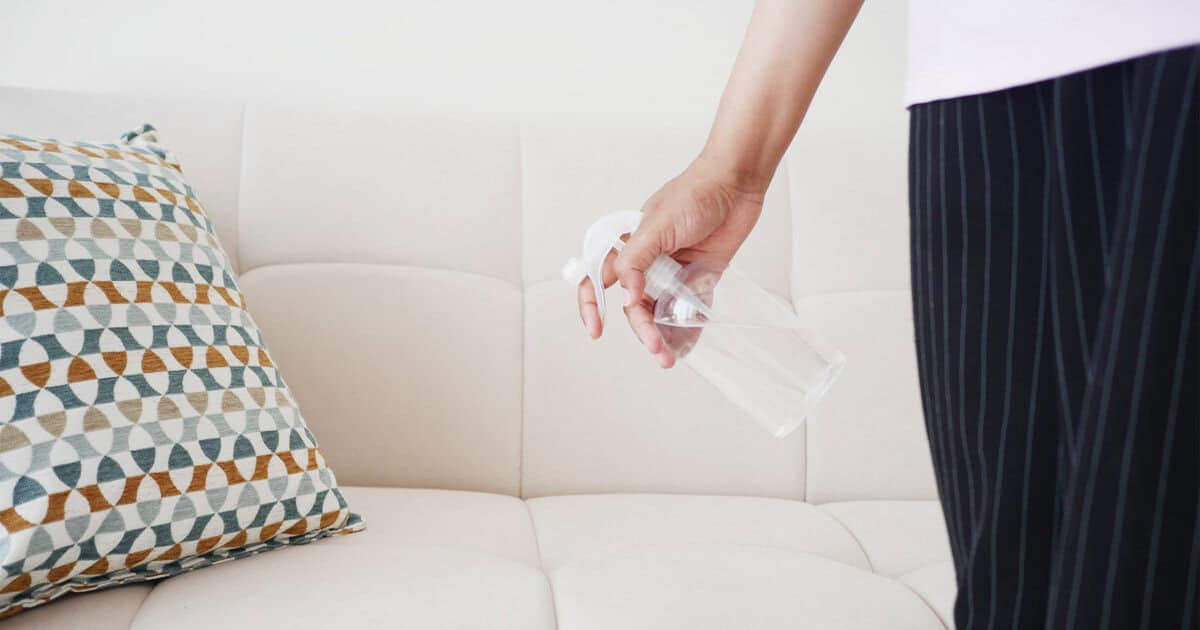
- Stand back further than feels right. Eight to twelve inches. Closer than that and you’re not misting the fabric, you’re wetting one spot on it, which is precisely how you get a ring on a pale sofa.
- Let it dry before anyone sits down. Damp fabric plus body heat is how a fresh spray turns into a musty one. Give it fifteen minutes.
- For sofas, go after the cushion backs and sides, not the seat. The seat gets sat on and scrubs the scent off within a day. The vertical surfaces hold it, and they’re the ones facing the room anyway.
- For curtains, spray the back panel. Air moves through them from the window side, so the scent gets carried into the room for free, and any mark that does happen is facing the glass and not your guests.
- For cars, ventilate and never spray a hot car. Do it with the doors open, hit the seat backs and the carpeted footwells rather than the seat bases, and leave the windows cracked for ten minutes. Spraying a car that’s been baking all afternoon just cooks the fragrance into something sharp and unpleasant.
- Avoid leather, suede, and silk entirely. These need products made for them. A linen spray on suede is a stain, not a refresh.
Another good habit to develop is using restraint. Two or three sprays on a cushion are enough. Pouring half the bottle onto the sofa won’t make the room smell any better; it’ll just leave the sofa wet. Plus, your nose quickly gets used to strong scents, so using more doesn’t have much effect.
Are Linen Sprays Safe for Upholstery, Car Fabric, and Pets
Three separate questions hiding inside one, so let’s take them in order.
Upholstery
Most water-based linen sprays are fine on most fabric. The genuine risks are water spotting on pale, tightly woven material and oil marks from oil-based formulas sprayed too close. Both are solved by the spot test and by standing back. Leather, suede, and silk are a different category and should be left out of this entirely.
Car fabric
Cloth seats behave like any other upholstery, so the same rules apply. Leather and vinyl seats do not, and a linen spray will do nothing good for them. If your seats are leather, spray the carpeted footwells and the fabric headliner instead and let the air circulation carry it. Ventilation matters more in a car than anywhere else in the house, simply because you’re sitting inside a sealed box breathing whatever you just released into it.
Pets, and cats in particular
This is the part most roundups skip, and it’s the part that actually matters.
Cats have far fewer of the liver enzymes needed to break down the compounds in many essential oils, which means substances that are harmless to you can build up in a cat and cause real harm. VCA Animal Hospitals lists cinnamon, citrus, pennyroyal, peppermint, pine, sweet birch, tea tree, wintergreen, and ylang-ylang among the essential oils that are poisonous to cats, and notes that both ingestion and skin contact can be toxic.
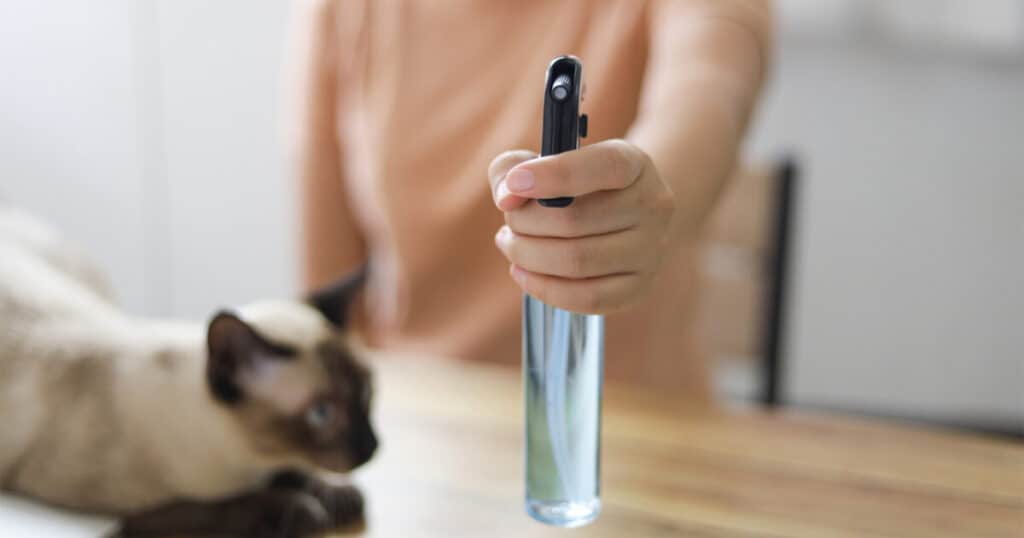
The ASPCA adds lavender to that list, because of two compounds called linalool and linalyl acetate that cats cannot process. The BC SPCA has reported a rise in essential oil toxicity cases, and points out that cats are at particular risk precisely because they groom themselves and swallow whatever has landed on their fur.
Read that last part twice, because it’s the bit everyone misses. A cat doesn’t have to drink the spray. It only has to sleep on the sofa you sprayed and then wash itself, which is, of course, the one thing cats reliably do.
Here’s the tough truth about this list: Lavender dominates the home fragrance aisle, and six out of ten sprays here are made with lavender, mint, eucalyptus, or ylang-ylang. If you have a cat, that eliminates most options. The safer choice is to go with a fragrance that doesn’t use any essential oils on this list; that means either the San Francisco Soap Company Italian Linen or the C&E Craft mist.
Spray only where the cat doesn’t sit, let it dry fully before the cat returns, and keep the room ventilated. No scented spray is completely risk-free around a cat, and anyone telling you otherwise is selling something.
Dogs are more tolerant than cats, but not invincible, and birds are more sensitive than either. If anyone in the house has asthma or a respiratory condition, go lighter than the label suggests. None of this means you can’t scent your home. It means reading the back of the bottle rather than the front, which is a habit worth building with essential oils generally, whether you’re spraying them or diffusing them.
Linen Spray Limitations and When to Deep Clean
A linen spray maintains freshness. It does not create it. Spraying a filthy sofa gets you a filthy sofa that smells of lavender, and you will notice the difference within a day.
The line is easier to draw than people think. A spray is the right tool when the fabric is already clean and just needs a refresh, like the sofa between deep cleans, curtains that have been hanging a while, or a car that smells stale rather than actively wrong. It’s the wrong tool when the smell keeps coming back within a few hours of spraying.
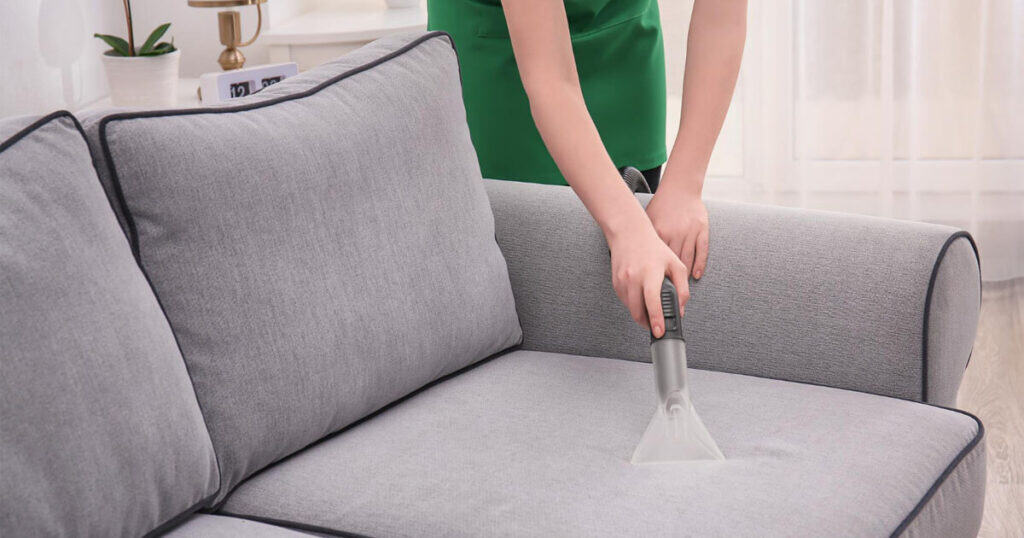
That returning smell is the tell. It means the odor source is still in the fabric and you’re only treating the air above it. Nothing on this list will fix any of the following.
- Pet urine. This needs an enzyme cleaner, which breaks down the compounds rather than trapping them. A linen spray on cat urine is a losing battle and everyone involved knows it.
- Mold or mildew. A musty, damp smell in a curtain or car carpet is a moisture problem. Find the leak, dry the fabric, then worry about scent.
- Set-in smoke. Smoke gets into the foam and the headliner, not just the surface. This is a deep-clean or professional-detail job.
- Spoiled food or milk in a car. You need to find it and remove it. No amount of eucalyptus is going to negotiate with it.
- Anything you can smell through a closed door. If it’s that strong, the fabric is saturated, and surface treatment won’t reach it.
Curtains are often overlooked when it comes to cleaning. Most can be machine-washed or at least freshened with a steamer, and just one good wash can make a huge difference if your curtains smell musty. I’ve seen people keep spraying air freshener on their curtains for months, when simply washing them once would have fixed the problem.
If you want to tackle odors at the source instead of just covering them up, there are natural ways to make your home smell good that cost nothing and work better than store-bought sprays.
What Should I Know Before Buying a Linen Spray
Once or twice a week is plenty for normal use. Daily spraying tends to mean you’re treating a smell that needs a deep clean instead.
Water-based ones rarely do. Oil-based ones can, if sprayed too close to pale or delicate fabric. Spot-test in a hidden place and spray from eight to twelve inches and you’ll almost certainly be fine.
Yes, and the footwells are often where the smell actually lives. Spray with the doors open and let it dry before you drive off.
An air freshener scents the air, and the effect leaves with the air. A linen spray is designed to bind to fabric, so the scent lives on the surface and releases slowly whenever something disturbs it, like sitting down or a breeze through a curtain. That’s why a good linen spray outlasts a good air freshener by an order of magnitude on the same surface.
You can. Distilled water, a little alcohol or witch hazel to help the oil disperse, and your scent of choice. It’s cheap and satisfying, and the fragrance oils guide covers which ones hold up on fabric. What homemade won’t do is neutralize odors, because you’re building a fragrance rather than a deodorizer, and it will separate unless you shake it every time. For a clean sofa, DIY is fine. For a smelly one, buy the Ordenone.
No, and it often means the opposite. A powerful hit at the nozzle is usually top notes, which are the cheapest part of a fragrance and the first to disappear. Judge a spray four hours later, not four seconds later.
Bottom Line on Choosing a Linen Spray
The sofa, the curtains, and the car all have the same problem: they collect everything and get washed almost never. That’s why the best linen sprays aren’t the ones that smell strongest in the shop. They’re the ones still doing something four hours later on a surface you can’t wash.
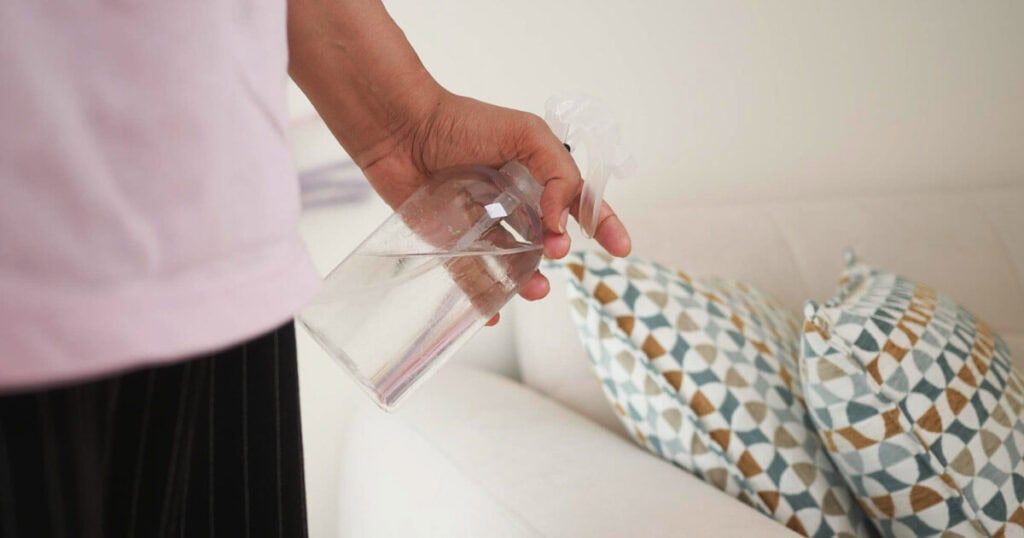
If you’re buying one bottle, make it the San Francisco Soap Company Smells So Clean in Italian Linen. At 33.8 ounces with a proper trigger sprayer, it covers a sofa, curtains, and a car without you having to count the sprays, and the clean-cotton scent is the one most people are actually after. Just accept the small risk of a weak bottle.
If the problem is a genuine smell rather than a preference, buy the SMELLS BEGONE Air Freshener Home & Linen Spray instead. It’s the only one here built to capture odor molecules rather than perfume over them, and on a dog-owned sofa or a car that’s been through a summer, that’s the difference between fixing it and postponing it.
And if you have a cat, skip the lavender, mint, and eucalyptus picks entirely, which unfortunately rules out most of this list. Go with a fragrance-based formula instead. The San Francisco Soap Company bottle is both the best overall pick and the sensible one here, while the C&E Craft Mist is the the best alternative. Spray where the cat doesn’t sit, and let it dry.
Once the fabric is handled, the air is the next lever, and it’s a far more forgiving one. My guide to the best low-maintenance diffusers for daily use is the natural next stop if you want a whole room to hold a scent rather than just the sofa.
The test I keep coming back to is a simple one. Sit down on that sofa four hours after you’ve sprayed it and see whether you notice anything at all. If you do, you bought the right bottle. Almost every spray passes at four seconds, and almost nobody checks at four hours, which is the entire reason this list exists.